
"climate for coffee"
20000 article(s) found

Coffee growing in Santo Domingo, Dominican Republic Location Climate Altitude Profile
In the early 18th century, coffee was introduced to Dominica from Martinique, and the northern regions, represented by Ciba, and the southern regions, including Ocayabani Santo Domingo, produced fine coffee. Among them, Santo Domingo and Bani produced coffee, almost synonymous with Domica coffee, is world-famous quality coffee. Santo Domingo coffee, characterized by fresh and elegant,

Introduction to the characteristics of high-quality coffee beans in the producing area of Ecuadorian coffee with balanced acidity
Ecuador is divided into the western coast, the central mountains, the eastern Amazon River basin and the four central regions of the Galapagos Islands, with diverse climatic conditions. The western coastal plain belongs to the tropical rain forest climate, with an average temperature of 23-25 ℃. The central Andes. The intermountain basin in this area belongs to the savanna climate, and the mountain belongs to the subtropical forest climate, with perennial snow above 4000 meters above sea level. Annual average decline

Flavor and taste characteristics of Guatemalan coffee producing areas introduction of high-quality coffee beans
Guatemala is located in the tropics, the northern and eastern coastal plains have a tropical rain forest climate, the southern mountains have a subtropical climate, the year is divided into two dry and wet seasons, with the wet season from May to October and the dry season from November to April of the following year. The narrow and fertile flatlands on the Pacific side of Guatemala have a tropical climate. The central plateau is also the cultural center of Guatemala, where the year-round temperature ranges from 1300 to 1800 meters.

Introduction to the flavor and taste of Dominican boutique coffee beans and the characteristics of the manor producing area
The earliest coffee in Dominica was introduced from Martinique (the overseas province of France), dating back to the early 18th century. Dominica is an island country with a tropical climate. The temperature changes little throughout the year. Except for the lower temperature in the Central Cordillera Mountains, which can reach less than 0 ℃ in winter, the annual average temperature in other areas is between 25 and 30 ℃, which is affected by the mountain topography.

A brief introduction to the planting situation of Dominican boutique coffee beans, geographical location, climate and altitude
The Dominican Republic is a popular country for travelers. It lives next to Haiti on the island of Hispaniola in the West Indies, Dominica in the west and Haiti in the east. The whitest and softest white sand in the world, the cool sea breeze from the Atlantic and Caribbean and the warm sunshine in the tropics make it a holiday paradise on a par with Maldives and Hawaii.

Coffee-producing areas of Papua New Guinea with a humid and rainy climate
The tropical climate is humid and rainy, rich in coconuts and coffee. Forests and mineral resources are also rich. Rabur is the sixth largest town in the South Pacific island nation and an important shipping hub. Its rich coffee and other goods are exported from this port. Papua New Guinea has a detached and primitive natural environment and its land is vast and fertile. Its unique volcanic rock soil and abundant

Flavor Description of Colombia Coffee Bean Grind Scale Production Area Treatment Taste Introduction
Colombia Coffee Bean Flavor Description Grind Scale Production Area Treatment Taste Introduction Colombia's favorable climate provides a true natural pasture for coffee. Coffee trees in Colombia are cultivated mainly in the Andes, on steep slopes up to 1,300 meters above sea level, where the temperature is about 18 degrees Celsius all year round, the annual rainfall is 2000 to 3000 mm, and the latitude is 1 - 1

A brief introduction to the History and Culture of the Origin and Development of Yunnan Fine Coffee beans with humid Climate
Coffee is a short-day plant. Coffee has the characteristics of multiple flowering and concentrated florescence. The florescence of small seed coffee in Yunnan is from February to July, and the flowering period is from March to May. The flowering of coffee is greatly affected by climate, especially rainfall and temperature. Coffee flowers have a short life span of only 2-3 days. Small seed coffee usually opens at 3: 5 in the morning and blooms from 5 to 7 o'clock. Tibica (Typica)

How about El Salvador Coffee? El Salvador Bourbon Coffee Flavor Introduction
Professional coffee knowledge exchange More coffee bean information Please pay attention to coffee workshop (Weixin Official Accounts cafe_style) Front Street Coffee Introduction-El Salvador Coffee El Salvador [Climate Characteristics] Savanna climate Plain area belongs to tropical rain forest climate, mountain area belongs to subtropical forest climate. The annual average temperature is 25-28℃, the annual precipitation in mountainous areas is more than 1,800 mm, and that in coastal areas is about 1
Geo-climatic production process of coffee in Rwanda
Maraba Coffee, the geographic and climatic editor, is grown in southern Rwanda, about 12km (7 miles) from the city of Butare and 150km (93 miles) from the capital, Gejali. The plan began in the Malaba area of Butare province, but was taken over by a local government organization in 2006, which is now part of the Huye district of the southern province. Due to its proximity to the East African Rift Valley and Neuenweisen,

Introduction to the characteristics of Ecuador Fine Coffee Flavor Manor
Ecuador is divided into the western coast, the central mountains, the eastern Amazon River basin and the four central regions of the Galapagos Islands, with diverse climatic conditions. The western coastal plain belongs to the tropical rain forest climate, with an average temperature of 23-25 ℃. The central Andes. The intermountain basin in this area belongs to the savanna climate, and the mountain belongs to the subtropical forest climate, with perennial snow above 4000 meters above sea level. Annual average decline

What is the flavor and taste trend of Burundian coffee? Planting climate, environment and history?
Professional coffee knowledge exchange more coffee bean information please follow the coffee workshop (Wechat official account cafe_style) what is the flavor and taste trend of Burundian coffee? Planting climate, environment and history? AA of Burundi, a coffee guest from a small country in the interior of East Africa, came together this morning to measure 15 grams of beans baked yesterday into Xiaofei Mali and turned on the switch.

Tropical climate features Rwandan coffee flavor, characteristics, taste and manor
Since the 1920s, Arabica coffee grown in Rwanda has been famous for its unique fruit sweetness and rich grass aroma. In recent years, the Rwandan government has taken positive measures to vigorously promote coffee production, set up coffee production cooperatives in various places, and give technical guidance and financial support to farmers, so that coffee production has made considerable progress. University of Rwanda

Hawaii Kona, Hawaiian Kona Coffee. How to make Hawaiian Kona Coffee?
Professional coffee knowledge exchange more coffee bean information please follow the coffee workshop (Wechat official account cafe_style) Greenwell was founded by Henri Nicholas Greenville (Henry Nicholas Greenwell) in the 19th century, 1850, customers will come to buy coffee, related souvenirs and visit the coffee raw bean processing process, Henry arrived from the United Kingdom soon after the exhibition

Yemeni climate is dry and suitable for growing coffee mocha coffee has a strong earthy flavor and unique taste.
For information, please pay attention to the coffee workshop (Wechat official account cafe_style) the Yemeni climate dry coffee fruit is actually picked and placed in the sun to dry. Once the appearance hardens, the fruit begins to shrink and the color becomes dark brown or black. After that, people will peel off the hard shell by hand and take out the coffee beans. It is believed that it is this drying process that makes coffee sweet.

Climatic characteristics of coffee producing areas in El Salvador
On the whole, Salvadoran coffee inherits the mild quality of Sino-American coffee, which is soft, slightly sour and has beautiful sweetness. At the same time, it also has its own characteristics: the aromatic taste is slightly sour and very soft; it is pure and has no miscellaneous flavor, and the taste balance is excellent; the smooth feeling like cream chocolate is impressive; the dense feeling of the coffee in the mouth gives the coffee depth.

Yunnan fine coffee beans cultivation geographical location climate altitude profile
Planting areas are mainly distributed in Lincang, Baoshan, Simao, Xishuangbanna, Dehong and other prefectures. Baoshan has an average temperature of 21.5℃ and a maximum temperature of 40.4℃. There is basically no frost all year round. It is recognized as the best producing area of Arabica coffee. The Arabica coffee cultivated here is famous for its strong but not bitter, fragrant but not strong, well-proportioned grain facets, mellow fragrance and fruity flavor. International Coffee Organization tasting experts

Coffee Storm-will coffee disappear from the world in the future?
Professional coffee knowledge exchange more coffee bean information Please pay attention to the coffee workshop (Wechat official account cafe_style) Climate change has affected the growth of coffee, especially the more sensitive Arabica beans are more sensitive to temperature, the increase in temperature will easily cause insect pests and leaf rust

Brief introduction of planting Market Price of Incht Manor in Waiqiang Plateau, Guatemala Antigua Coffee
Because it is planted in the hills of volcanoes, it can retain its own characteristics more than Costa Rica, the main reason is that it has more geographical and climatic advantages than Costa Rica. Guatemala is located in the tropics, but due to the relatively high altitude, the climate is mild, it is a subtropical climate. Under the influence of this climate, coffee trees blossom and bear fruit more than any other place in the world.
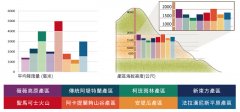
The eight major producing areas and microclimate of Guatemalan coffee create a perfect flavor.
Have you ever wondered how many stories are behind this beautiful cup of coffee? This article discusses the micro-climate features that are closely related to Guatemalan coffee. After the impact of the Kuroshio movement, people gradually began to have professional knowledge and technology related to the coffee industry. In addition to the annual large-scale coffee-related exhibitions, baristas competitions, and the rapid development of baking equipment, we are interested in